The autumn months mean the solar generation from our 3.6kWp system starts to drop from the highs of the summer months.
Our Monthly Solar Performance
September 2025
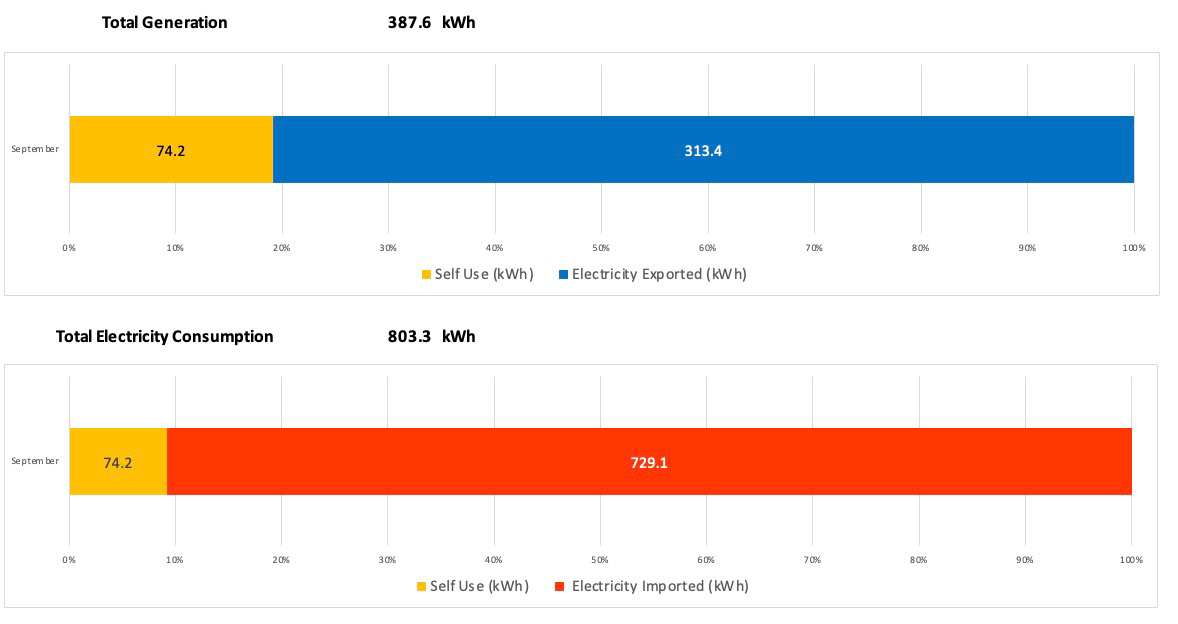
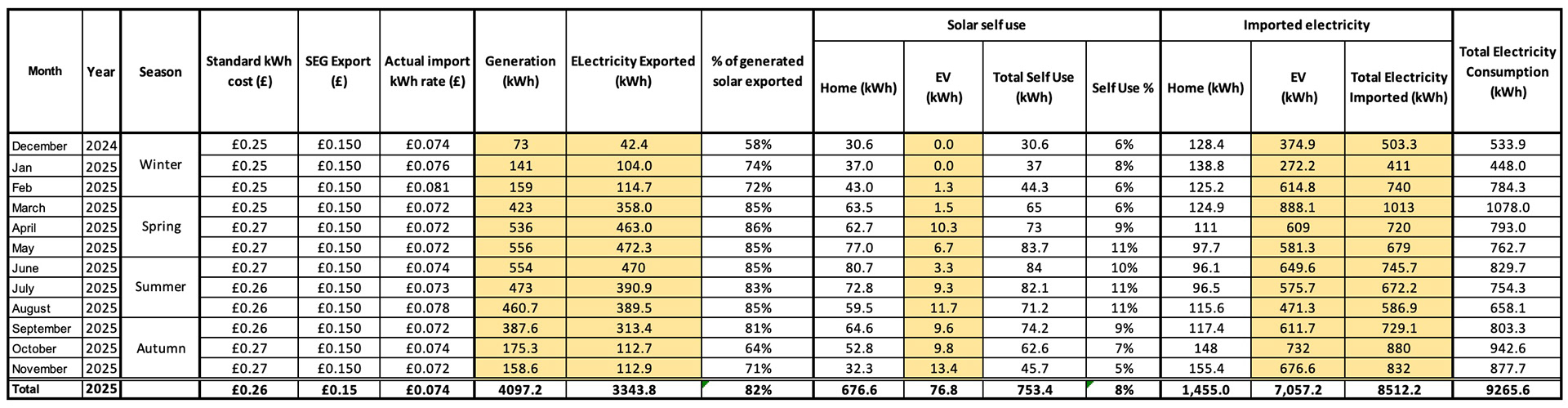
Generation this month was 387.6kWh. This was above September 2024's 317kWh but slightly lower September 2023's 399kWh. Still it was above the expected estimated monthly solar generation of 340kWh.
Our self consumption of generation was 19%. This was actually 36% of our total home consumption (excluding EV consumption). This had dropped over the summer months when 46% of our home consumption was from solar self use. If we didn't charge the home battery overnight it would likely be much higher as there would be room in the home battery to store solar generation for us to use later.
We exported 313.4kWh (81%) of the 387.4kWh solar generation. This produced an export payment of £47.01.
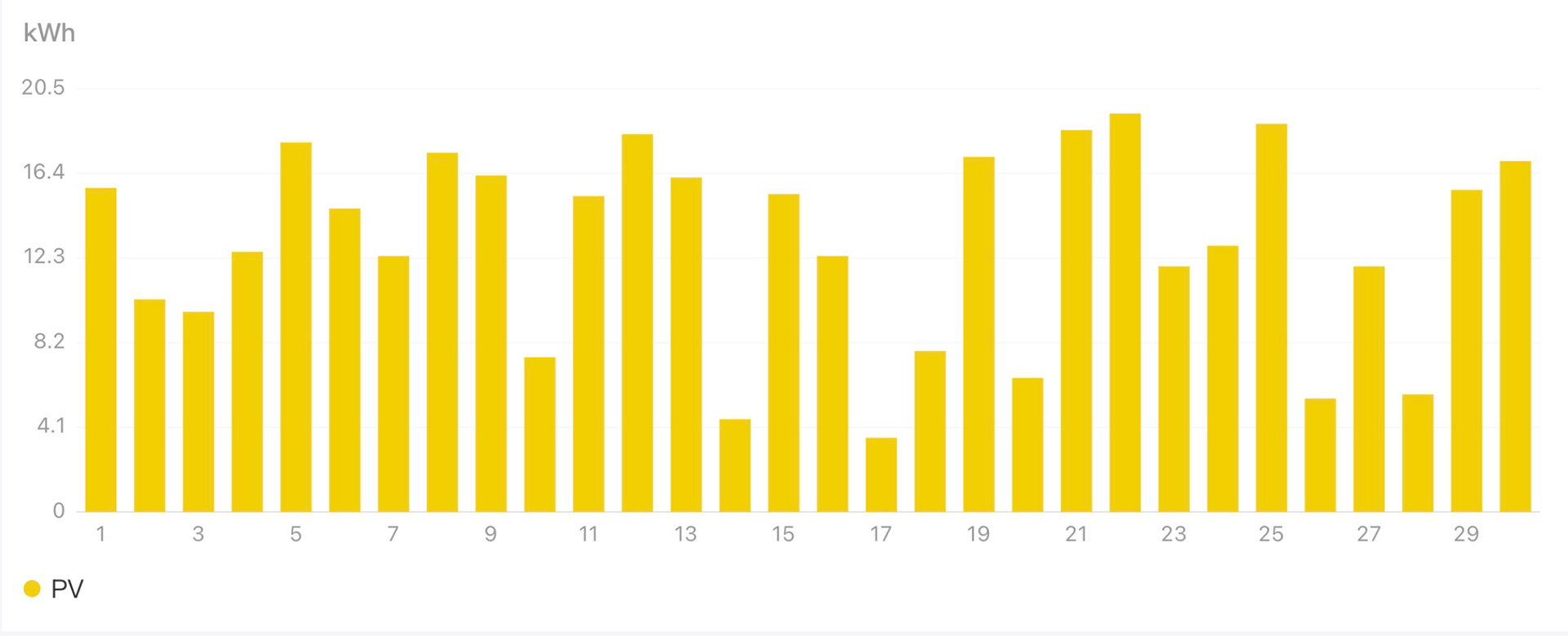
Generation per day over the month of September was a mixed bag. The middle of the month from 11th September to 18th September was great for 7 days as it produced 132.4kWh (41% of the total months solar generation)
There were 14 days over 10kWh and 7 days over 15kWh. Our highest daily generation was 22nd September with 19.3kWh. There were 2 days under 5kWh. Our lowest was 3.6 kWh on 17th September.
By the end of September our solar panels had generated 3763.3kWh since the start of last winter (from 1st December 2024). Thats 3.3% over the estimated annual generation of 3644kWh in just 10 months! With the annual estimated generation already beaten we had 2 months to add to this years actual generation.
October 2025
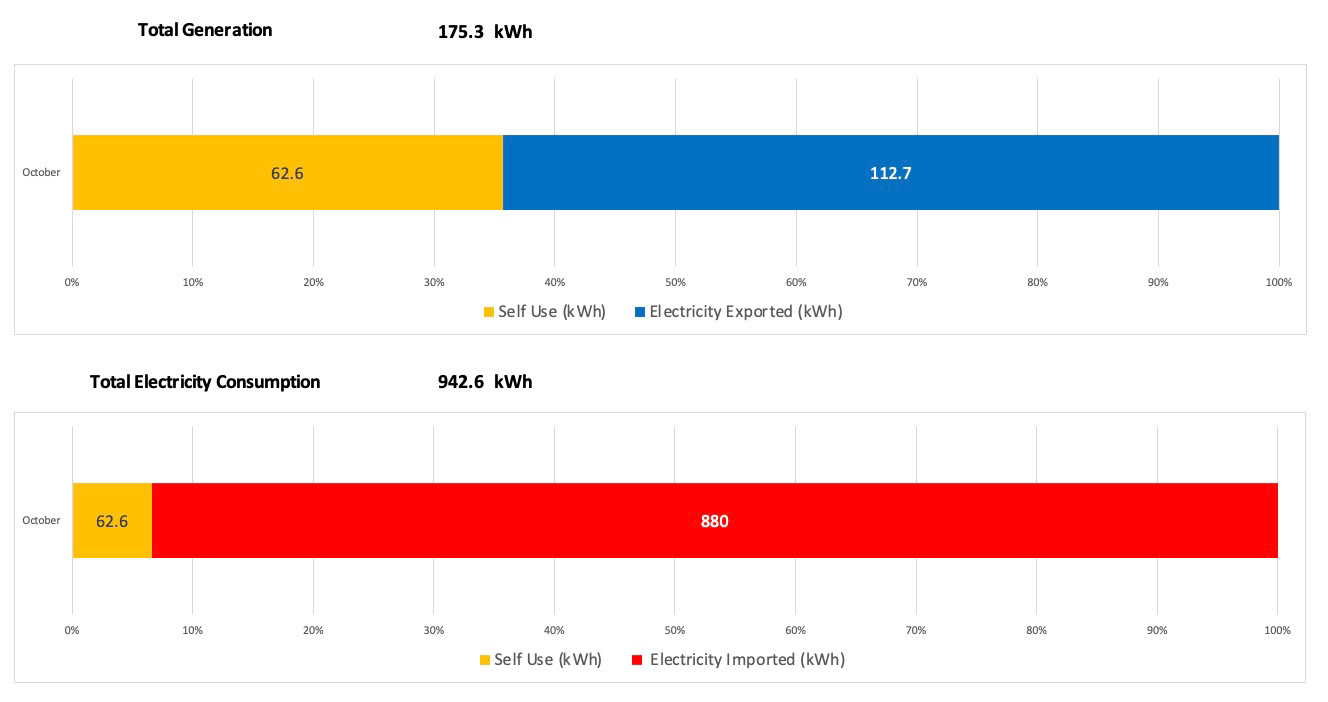
October's solar generation was a very low 175.3 kWh. That's much lower than 2024's 235kWh and 2023's 271kWh. It was 26% below the expected 236 kWh estimated generation.
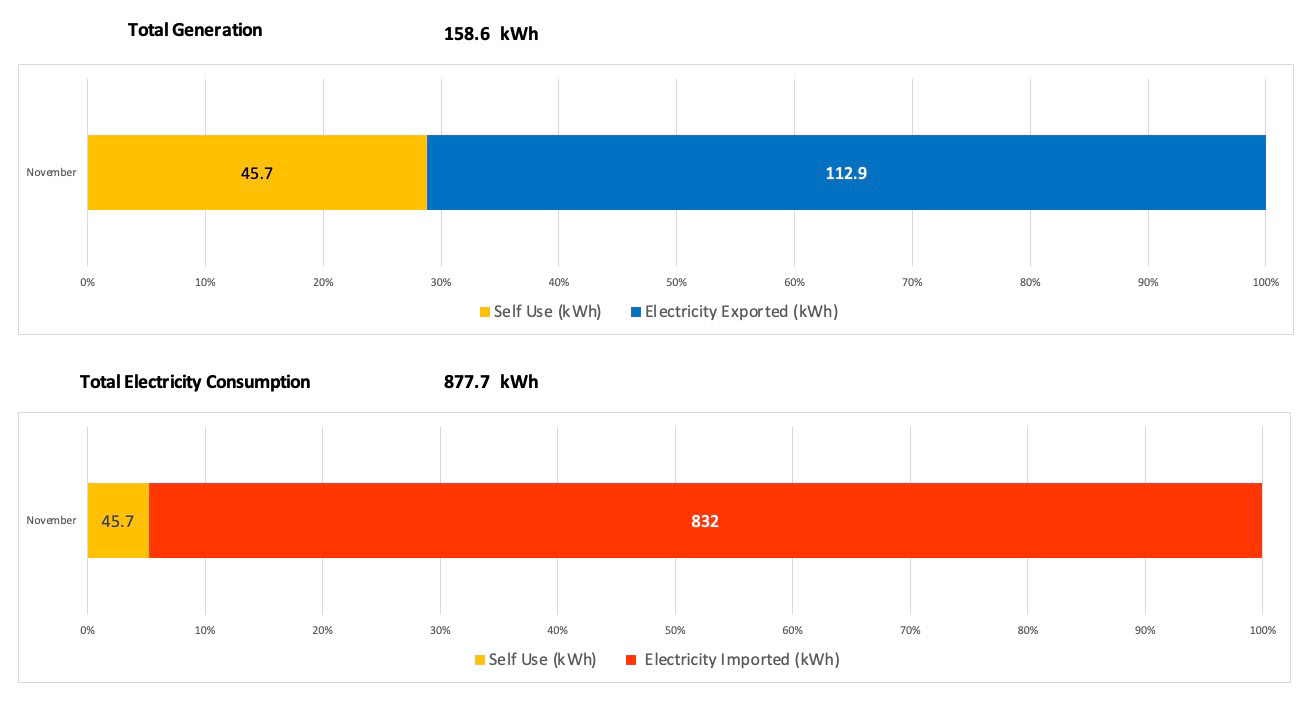
Our self consumption this month of total electricity consumption was 36%. We exported 64% (112.7 kWh) of the overall solar generation of 175.3kWh. This produced an export payment of £16.91.
Our total imported electricity was a huge 880kWh, of which 732kWH was used as EV charging.
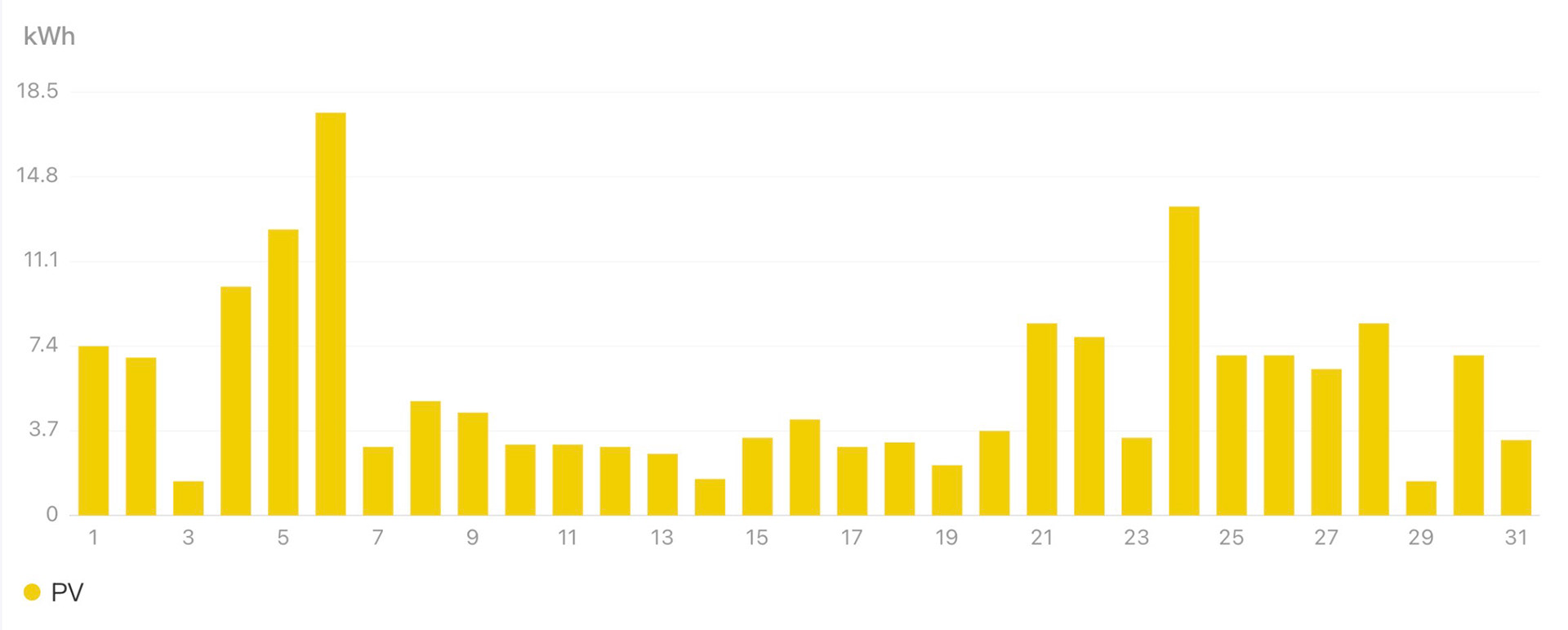
Generation started off well with the highest day of generation 17.6kWh on 5th October, but a 14 day period of solid cloud after that meant we averaged 3.5kW per da. That badly affected generation and was the main cause of being 26% below estimated generation for the month.
Overall there were just 4 days over 10kWh generation. There were 18 days with under 5kWh generation. The lowest generation was 1.5kWh on 3rd October.
NOVEMBER 2024
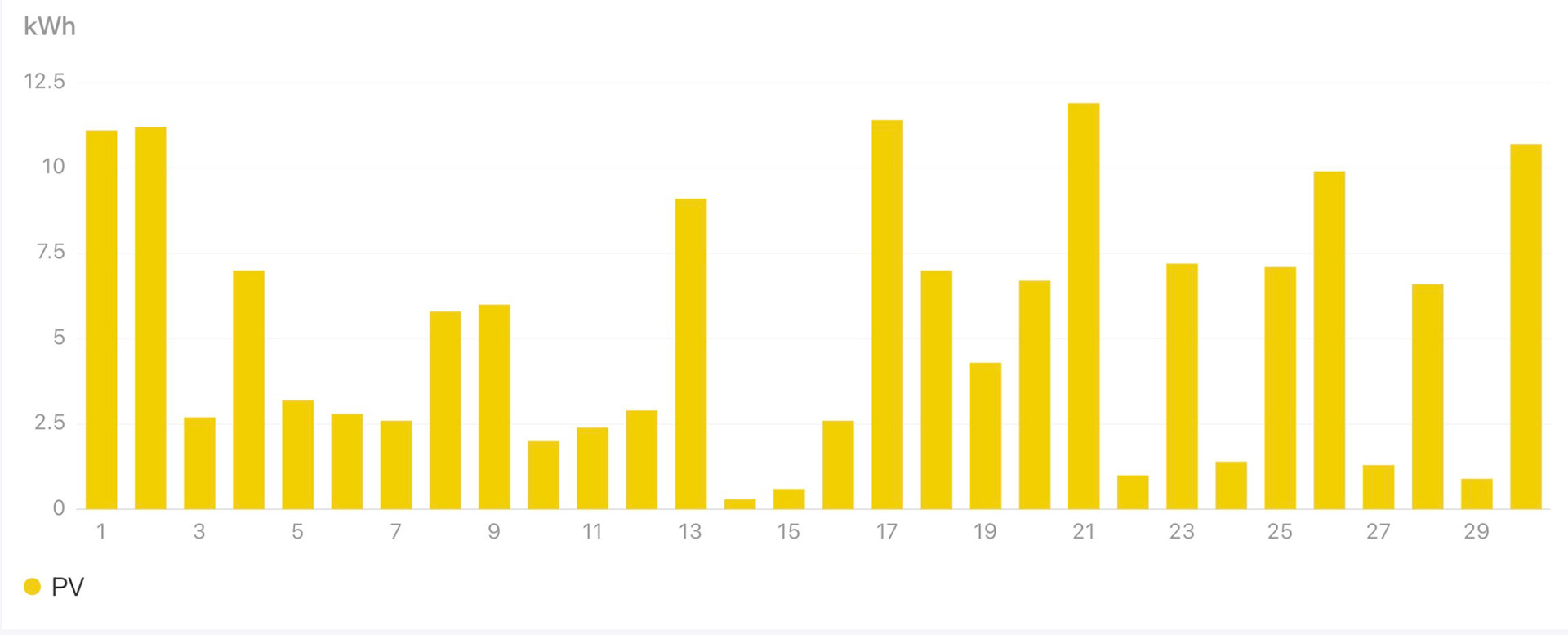
November's generation started off very well with 2 days over 11kWh, but it didn't last. The actual generation of 158.6kWh was slightly lower than expected 162kWh.
The highest daily generation was 11.9kWh on 21st November. There were just 5 days over 10kWh generation. There were 14 days under 5kWh. Our lowest generation was just 0.3kWh on 14th November.
Our self use consumption was 5% as a percentage of total consumption.
Generation Performance
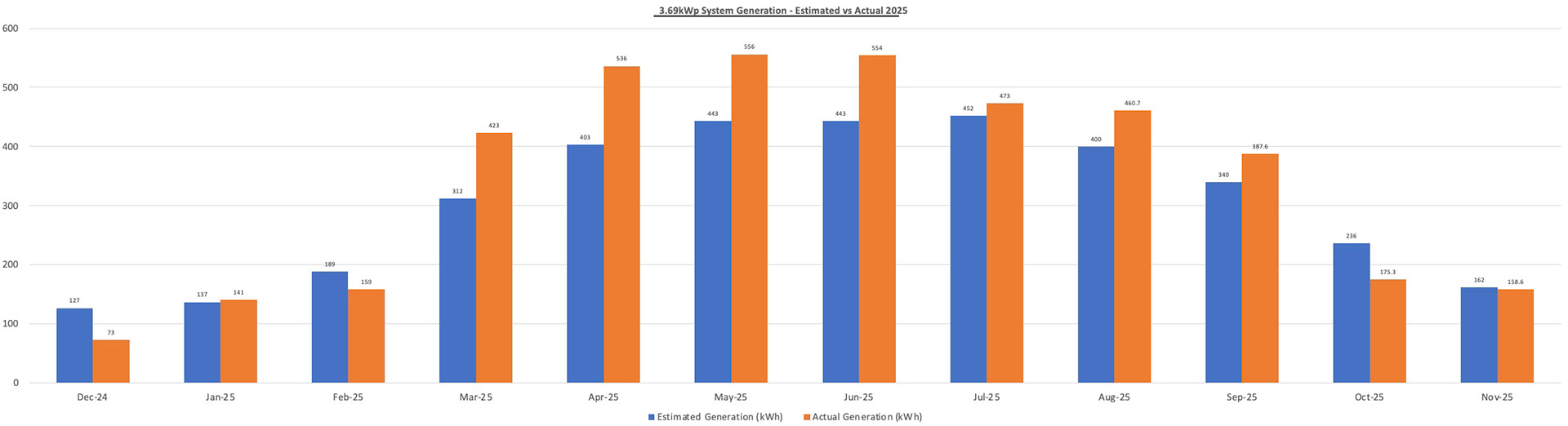
Solar generation in September (387.6kWh) was 14% above the estimated generation (340kWh).
Actual solar generation (175.3kWh) was very low in October, as it was 26% below the estimated generation of 236kWh.
Solar generation in November (158.6kWh) was similar to the expected 162kWh. This was 2% under the estimated generation.
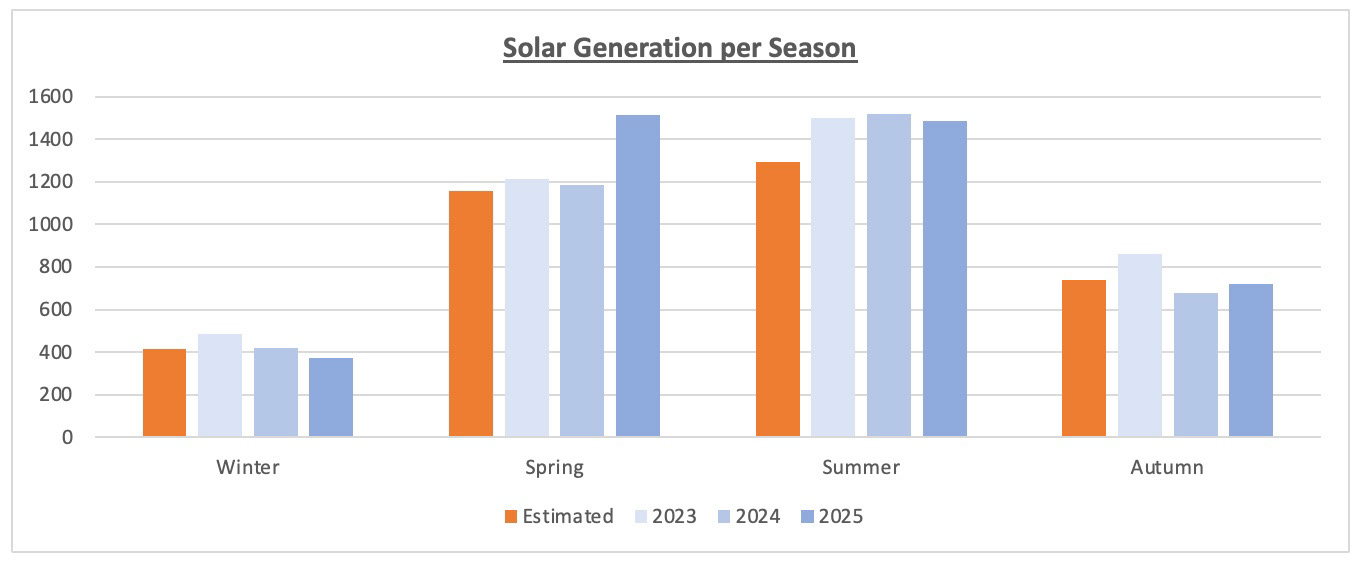
Overall autumn (721.5kWh) was 2.2% under the estimated generation of 738kWh.
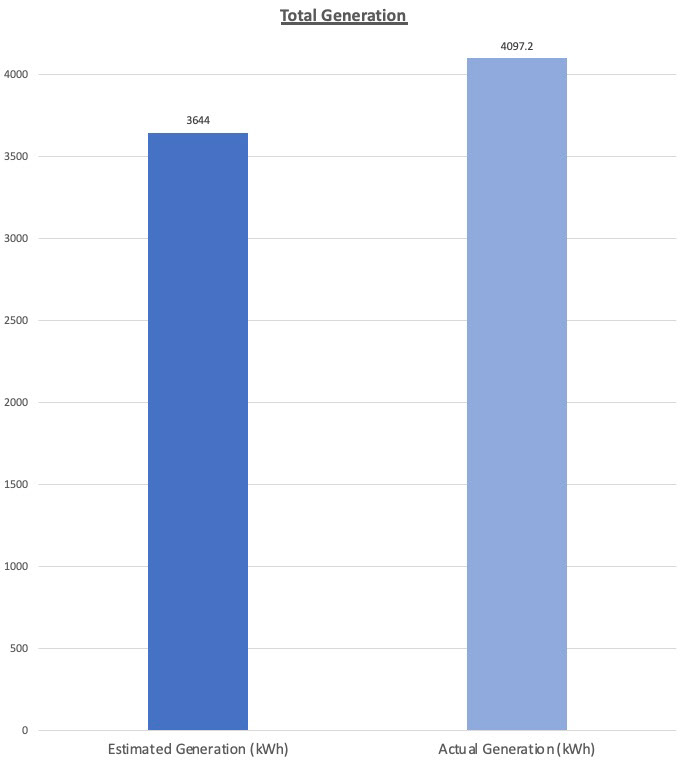
For the year so far the actual generation (4097.2kWh) was still ahead of the estimated generation (3644kWh) by 453.2kWh. This was higher than 2023's 4056kWh.
Savings
For the second year running we stayed on the same import tariff (Intelligent Octopus Go) and fixed export tariff (Outgoing Octopus) throughout the whole year. Once again due to the difference in import to export we charged the home storage battery overnight throughout the whole year. We only charged the EV via the smart scheduling which enabled EV charging to cost 7p/kWh.
We exported 539kWh back to the national grid during the autumn months. Self use consumption accounted for 182.5kWh, all except 32.7kWh was consumed by our home. It doesn't make sense to charge the EV by solar as our daytime export is higher (15p per kWh) than the cost of overnight import (7p per kWh). EV consumption occurred by discharging the home when Intelligent Octopus Go scheduled charging periods outside the 2330-0530 low rate window.
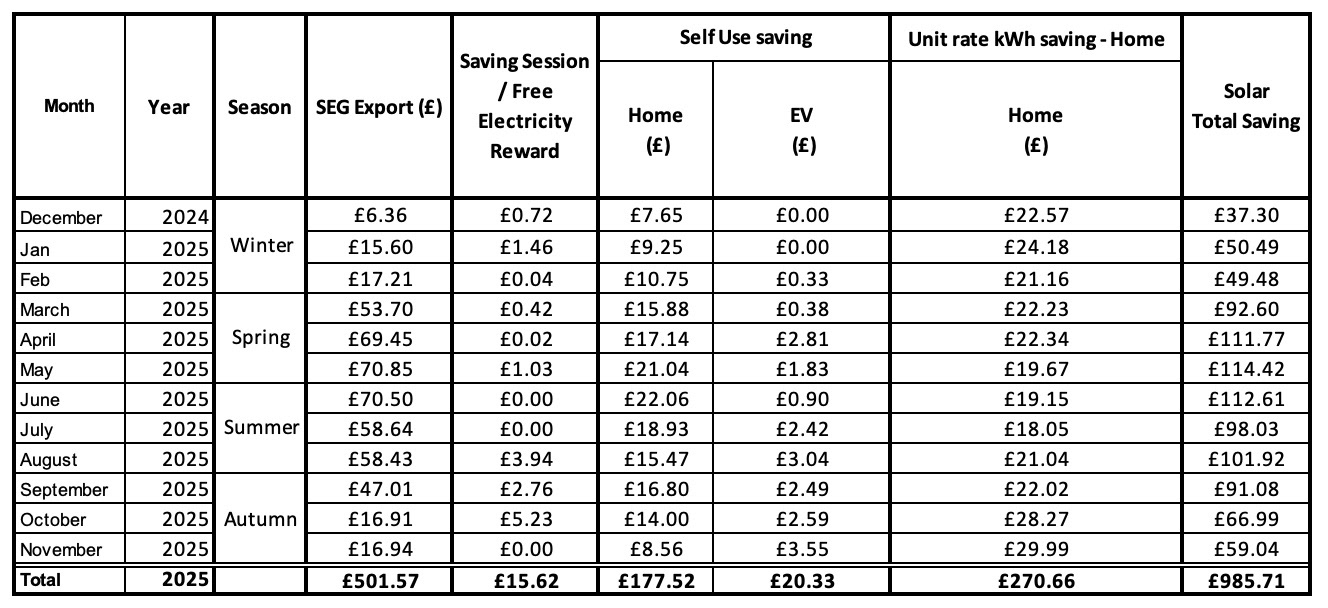
As expected savings from solar started to drop in autumn. Overall savings in autumn were £217.11. SEG export revenue was £80.85 from the 539kWh exported during autumn.
SEG export revenue was £501.57. Extra revenue from the saving sessions and free electricity periods was just £15.62 compared to £82.55 the previous year.
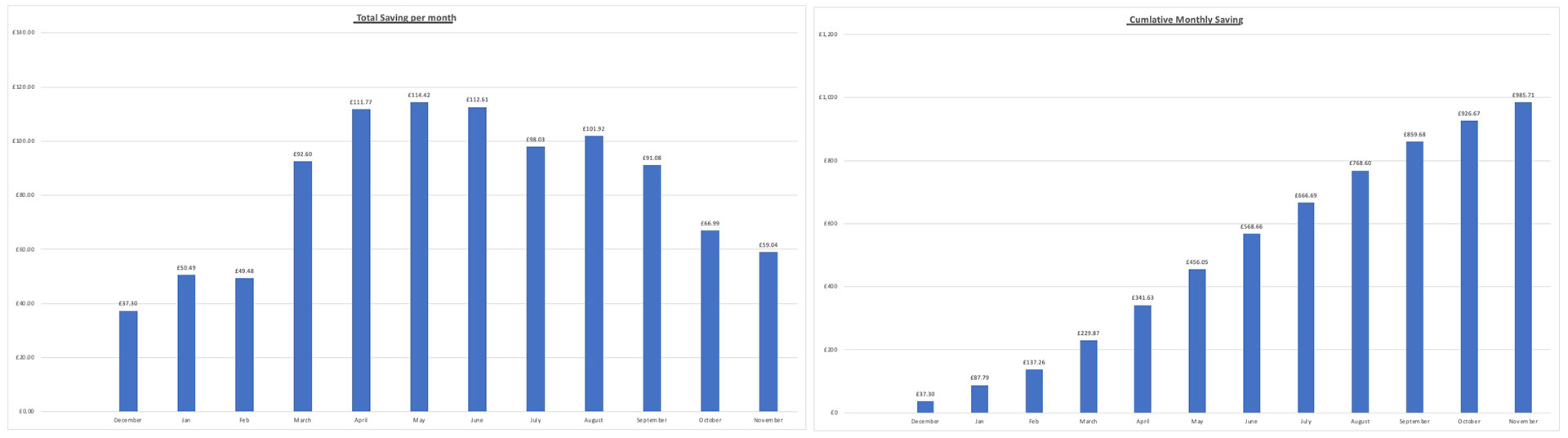
Overall the savings from solar/home battery throughout 2024 were £985.71, which were slightly lower than 2023's high of £999.24. I'm quite impressed savings were nearly as higher as 2023 as the standard variable rate of electricity had dropped from 35p/kWh in 2023 to 26p/kWh during 2025.
Over the year our home consumed 2131.6kWh of electricity compared to 2002.7kWh in 2024. Our EV's consumed 7143kWh compared to 6338kWh in 2024. This would have been higher if our high mileage EV wasn't off the road for 2 months at the start of the year.
Our overall unit rate averaged 7.4p/kWh in 2025. We exported 82% (3343.8kWh) of our solar generation in 2024, compared to 81% (3067kWh) in 2024.
Summary
Key Statistics for Autumn:
* 721.5kWh generated.
* 539kWh exported.
* 182.5kWh (7% of overall consumption) self sufficiency from solar.
* £217.11 saved.
* 19.3kWh (22nd September 2025) highest daily generation in autumn.
Key Statistics for all four seasons
* 4097.2kWh generated
* 3343.8kWh exported
* 753.4kWh (8% of overall consumption) self sufficiency from solar
* £985.71 saved
* Highest daily generation in 2025 - 25.5kWh (8th July 2025)
Generation per season was pretty similar to other years, except in spring 2025 was exceptional compared to previous years, and higher than summer 2025's generation.
2025 was very easy now we are into our third year of having solar and home battery. It now at a point where is just second nature living with solar and home battery. As expect we didn't change from Intelligent Octopus Go and Outgoing Octopus as it still provides a good compromise between solar export and the cost of import to charge the EV for us. We have moved to the fixed version of Intelligent Octopus Go due to the worry that the 7p/kWh low rate may not last too much longer.